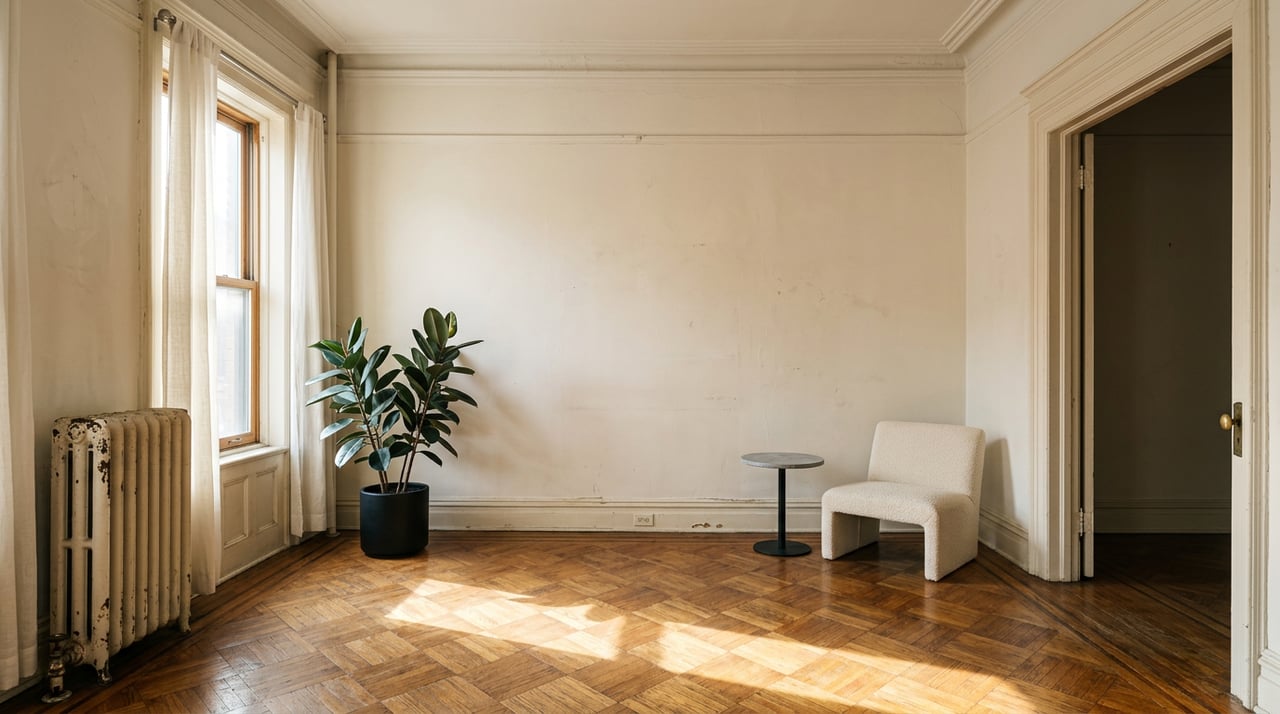
You spot a well-priced Upper East Side co-op with great bones, but the photos show old tile, aging cabinets, and worn floors. If the listing says “estate-condition,” you are looking at a unit that needs real work. That can be a smart path to value if you plan well. In this guide, you’ll learn what estate-condition means, how to value an unrenovated unit, the rules that control renovations, and the true costs and timelines you should expect on the UES. Let’s dive in.
What “estate-condition” means on the UES
Estate-condition in NYC listings usually means the apartment has not been updated in many years and will require significant work to modernize. Sellers are often executors or heirs who want a clean sale rather than a renovation. See how the industry uses the term in what “estate-condition” means in NYC listings.
On the Upper East Side, these homes often have prewar detail, generous layouts, and older systems. The upside is a lower entry price compared to renovated comps. The tradeoff is hidden costs, building rules, and a longer path to move-in.
Who buys these and why
- Owner-occupiers who love prewar character and want to modernize systems and finishes.
- Value-seekers comfortable with construction, approvals, and surprises behind the walls.
- Experienced investors who understand co-op renovation limits and timing.
If that sounds like you, the next step is building a realistic plan.
How to value an unrenovated co-op
Start with the After-Repair Value, or ARV. In simple terms, ARV is the likely price of your home after you finish the renovation. For background, read a plain-English explainer on how ARV works in real estate.
Here is a practical approach:
- Pull recent renovated comps in the building first, then the block. That sets your ARV range.
- Price the renovation with a local GC or architect. Add soft costs, permits, building review fees, and a 15 to 25 percent contingency.
- Subtract carrying costs for the renovation period. Include maintenance and any financing.
- Adjust for risk. If approvals are uncertain or scope is complex, you may want added cushion in your offer.
There is no universal discount for “estate-condition.” Appraisers use market-driven adjustments supported by real comps. Keep your math defensible with data and written estimates.
Co-op rules that shape your renovation
Renovating in a UES co-op is a contract and compliance process, not just design and build. Know the rules before you bid.
The alteration agreement
The alteration agreement is the building’s contract that governs your renovation. It sets what drawings you must provide, your contractor’s insurance, permitted hours, debris rules, deposits, and how you close out the job. For a real-world reference, review a sample co-op alteration agreement.
Typical requirements include:
- A written scope, schedule, and architect or contractor drawings for any work beyond basic cosmetics.
- Certificates of insurance naming the co-op and managing agent as additional insured, often with specific limits.
- Application fees and a refundable security deposit sized to your project.
- Proof you followed lead and asbestos rules and secured all permits and sign-offs.
Deposits and fees
Security deposits and application fees vary by building and by scope. In some prewar co-ops, light cosmetic work may have a modest application fee and a small refundable deposit, while invasive projects require higher fees, larger deposits, and payment for the building’s reviewing architect or engineer. Expect variance by building and confirm the current fee schedule in writing.
When DOB permits are required
Most work that touches plumbing, electrical, mechanical, structural elements, or involves demolition needs a Department of Buildings filing. Manhattan interior guts often trigger Alt-2 filings, which require an architect or engineer and DOB plan review. Learn the basics in the city’s DOB NOW Build overview. Your board will usually expect to approve your plan before any DOB submission.
Landmarks on the Upper East Side
Large parts of the UES fall within historic districts like Carnegie Hill and the Upper East Side Historic District. Exterior changes, including windows visible from the street, can require Landmarks Preservation Commission review. See how designation works on the LPC landmark designation page. Interior landmarking is rare, but if present, it adds a separate layer of review.
Lead and asbestos rules
Older UES buildings often contain lead-based paint and materials that may have asbestos. NYC and federal rules trigger testing, notifications, certified work practices, and, when needed, abatement. Building agreements require compliance and close-out proof. For owner guidance, review the city’s lead and asbestos bulletin. Plan for testing and possible abatement in both budget and schedule.
Realistic costs in Manhattan
Costs vary with scope, finishes, access, and surprises behind the walls. Recent Manhattan guidance suggests:
- Light cosmetic refresh: commonly $100 to $200 per square foot.
- Full gut of a prewar 1 to 2 bedroom: often $250 to $500+ per square foot, with high-end or complex MEP work reaching $500 to $800+ per square foot. See a current local breakdown of Manhattan condo renovation costs.
Do not forget soft costs. Architecture, engineering, expediting, and permit fees can add $10,000 to $40,000+, and your building may bill you for its reviewing architect or engineer. For a helpful overview of soft costs and ranges, see this NYC apartment renovation cost guide.
Timelines you can actually plan around
Every building and scope is different, but a common Manhattan sequence for a full gut is:
- Feasibility and initial drawings: 4 to 8 weeks
- Board review and alteration agreement approval: 4 to 12 weeks
- DOB permitting: 2 to 10+ weeks, with overlap possible
- Construction, hammer to finish: 4 to 9 months for a typical 1 to 2 bedroom
From design kickoff to final sign-off, many projects land in the 8 to 14 month window. Small scope moves faster. Larger or structural work takes longer.
Logistics that slow projects
Three items often delay starts and add cost:
- Insurance certificate wording that does not match the alteration agreement exactly.
- Elevator scheduling and protection rules that limit deliveries and heavy moves.
- Deposit holdbacks and close-out procedures that require full DOB sign-offs before refunds. A sample agreement with these clauses is linked above.
Financing and cash flow reality
Many lenders will not roll renovation costs into a co-op share loan the way single-family rehab loans work. Most buyers fund work with cash, a line of credit, or niche renovation financing. Talk to your lender early about board approval timing, reserves, and any requirements that could affect your closing timeline. This is one reason estate-condition homes often attract buyers who have renovation capital ready.
Pre-offer checklist for the UES
Do these items before you bid:
- Request the building’s alteration agreement, application checklist, and any alteration fee schedule. Ask for recent minutes that note capital projects or assessments. See how detailed these can be in a sample co-op alteration agreement.
- Ask for the co-op’s P&L, balance sheet, reserve schedule, and shareholder meeting minutes from the past 12 to 24 months. A quick guide to why this matters is in this note on preparing a classic UES co-op to sell.
- Do a feasibility walk with a local architect or GC. Identify risers, electrical capacity, floor conditions, and potential lead or asbestos hot spots. Get a one-page ballpark estimate before you submit an offer.
Post-offer steps and smart safeguards
- Signal your renovation intent in the board package. Include a basic scope and your intended design team so the board can flag any restrictions early.
- Budget line items for board deposits, building review fees, DOB filings, expediting, professional design, testing and abatement as needed, a 15 to 25 percent contingency, and carrying costs over the renovation period.
- Put building schedule constraints into your contractor’s plan. Noisy work windows, elevator access, and move-in blackout dates affect cost.
Red flags to watch
- An alteration agreement that is vague, unusually punitive, or shifts unlimited liability to you.
- A building that refuses standard permits or demands unusual insurance riders.
- Signs of deferred capital work or repeated special assessments in recent minutes.
- Frequent DOB stop-work orders or many outstanding violations on city records.
The bottom line
Estate-condition co-ops on the Upper East Side can be an excellent path to value if you plan like a pro. Start with the ARV, get real costs in writing, study the building’s rules and financials, and line up your approvals and cash flow. With a clear roadmap, you avoid surprises and protect your upside.
If you want a second set of eyes on pricing, scope, and building due diligence, connect with Carlos Beltran for a private consultation.
FAQs
What does “estate-condition” mean for a UES co-op purchase?
- It signals an apartment that has not been updated in years and needs significant renovation, which can create a price discount but adds cost, approvals, and time compared to move-in-ready units.
How do I estimate renovation costs for a prewar UES co-op?
- Use a per-square-foot range for scope, then confirm with a GC: cosmetics often run $100 to $200 per square foot, while full guts can reach $250 to $500+ per square foot, with soft costs on top.
Which permits and approvals do UES co-op renovations require?
- You typically need board approval under the building’s alteration agreement and a DOB filing for plumbing, electrical, or structural work; exterior changes in historic districts may need LPC review too.
How long does a full UES co-op renovation take?
- A typical 1 to 2 bedroom gut often spans 8 to 14 months from design to final sign-off, with construction itself taking about 4 to 9 months depending on scope and building logistics.
How should I value an unrenovated UES co-op before bidding?
- Start with ARV based on renovated comps, subtract realistic hard and soft costs, add contingency and carrying costs, then adjust your offer for board and permitting risk.